Travels with Penelope

Travel, Food, Wine, Spirituality and Everything Else

Author: admin (page 10 of 14)

August 5, 2014 Soul Foodie Mate: Fabrizia Fiori

“I’ve always been a passionate about food and everything started when I was a child. I used to go to my grandmother’s house to cook with her.”

Fabrizia Fiori’s email led me on a short, but sweet trip down memory lane.

I recalled sitting on a kitchen ladder beside my paternal grandmother while she demonstrated how to make chocolate chip cookies with black walnuts from the tree in her back yard; I remembered standing next to my maternal grandmother in her utility room, observing the traditional way she made bread. I sat on a bar stool watching my mother bake cakes: white, chocolate, pineapple upside down, banana, and pies: apple, peach, cherry, coconut cream, lemon meringue, pumpkin, pecan. Bowl licking–an essential ingredient.

The joy of baking cookies and cakes–play for preschoolers–gave way to more serious stuff when I became my mother’s sous chef at the ripe age of seven. Not to say that my adventures with baking stopped. I remember swapping cookie recipes with the mother of one of my playmates at nine. To this day, that cookie, crisp, with oatmeal backdrop fronted by a soft cinnamon twirl is a favorite (recipe available on request).

Several things influenced what went on in our kitchen. My father’s vegetable garden along with the changes in American cuisine as a result of the development of frozen foods, Campbell Soups, and jello among others. The American Woman’s Cook Book, Betty Crocker and The Joy of Cooking played a role. Likewise, my parents were aware of the basic 7 food groups established in the 1940’s. By the time I graduated from the family school of culinary arts I could pull off stuffed bell peppers, baked beans, fried chicken, potato salad, macaroni and cheese, and tuna noodle casseroles.

Showing a proclivity for cooking, my parents decided with my approval, that I would be the designated chef during school vacations. Menus and recipes posted on the door of the refrigerator by my mother facilitated my assignment to put dinner on the table by 6:00 PM. Her rule of thumb: a proper meal must include a salad, veggie, potato and protein. Little did she know, she was contributing to the making of a foodie.

In some cultures a woman is not considered ready for marriage if she does not know how to cook. I would have fit in to those cultures.

In preparation for the trip to Sardegna I pored over Motus Travel’s website:

Motus Travel Sardinia
www.travelmotus.com/

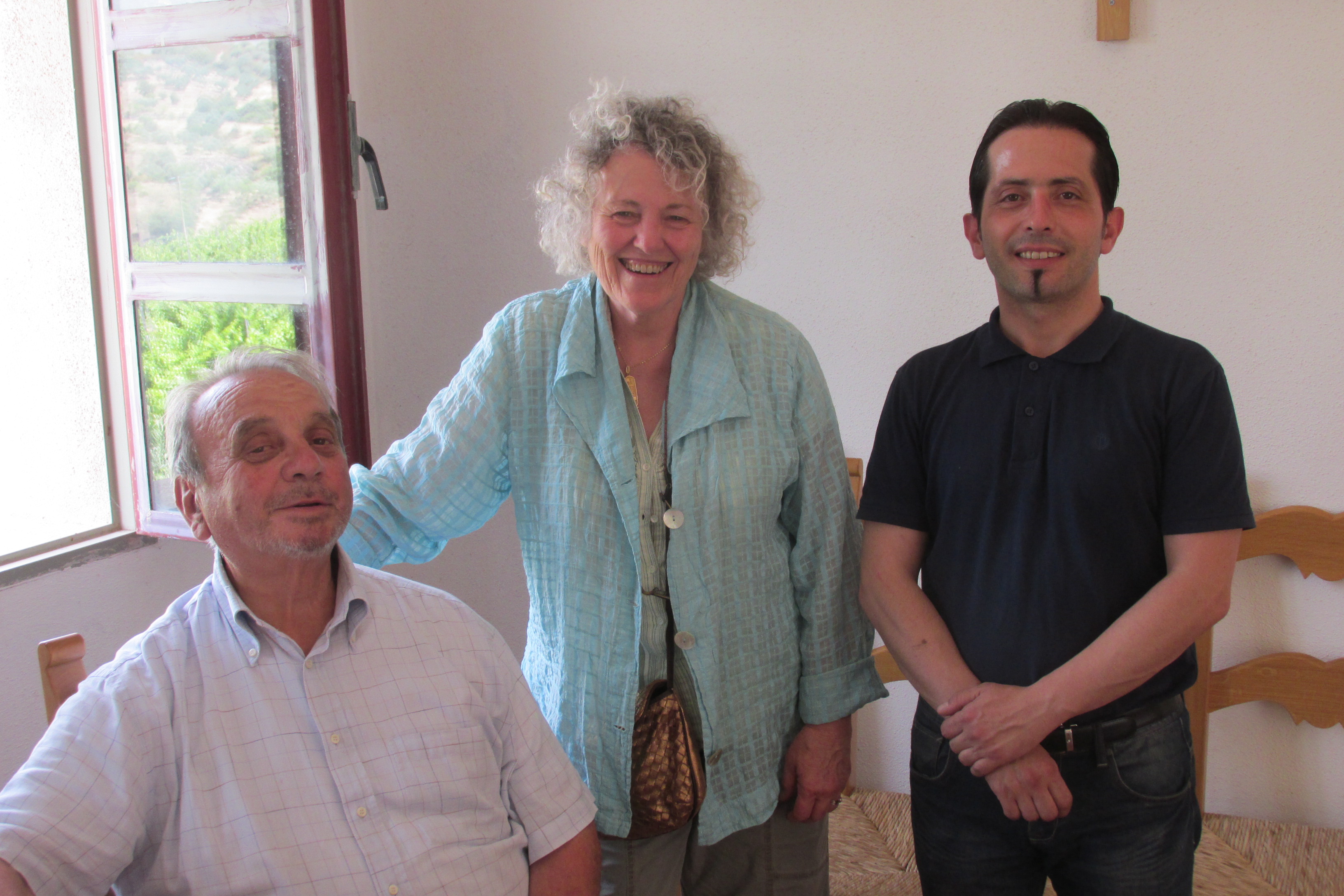
“Enjoy cooking classes” jumped out at me. Oh my goodness! I contacted Mario Delitala, managing director of Motus immediately. He responded by setting up a class with Fabrizia Fiori. I sensed that this would not be  just any cooking class! On the given Saturday we drove from our hotel in Cabras to the nearby city of Oristano.  Fabrizia met us at the historic center of town and led us to her home. As we followed my inner psychic had me jumping up and down. I knew I had met a foodie soul mate.

No one is more prepared to teach Sardinian cooking than Sardinian native and resident Fabrizia Fiori.


foto fabrizia


Not only did her grandmother teach her the typical dishes of her family, she taught her what Sardinians value most. “She taught me that the most important ingredient was what she called ‘pizzico d’amore’ (pinch of love). She meant what is most important is the passion you put in what you’re doing.”

After that, “my mother introduced me to the Italian word for culinary: she bought me Cucina Italiana, the first Italian culinary magazine. Every month we spent spent a lot of time cooking the classical Italian recipes garnered from the magazine.”

On graduating from the university in Milan where she studied languages, Fabrizia worked as a German and English translator until she joined and began creating events for the Slow Food Movement. From 2006-2012 she ran Slow Food Sassari where she got to know the most important high quality food producers. She continued her culinary education through several Master of Food classes about specific topics: wine, cheese, fish, meat, sweets, chocolate, beer and spirits and obtained her Sommelier certificate from the worldwide AIS.


IMG_4617


Today Fabrizia is a gastronomic guide, culinary teacher for tourists, and a personal chef for local people. In 2013 she won the television food competition Cuochi e fiamme.

Why does someone become a chef? For the same reason a writer becomes a writer, a painter becomes a painter. They have to. Fabrizia started as a child and never stopped!

In 2013 she participated in the Italian food competition Cuochi y Flamme and won.

https://www.youtube.com/watch?v=yrsmYbLtYpI&oref=https%3A%2F%2Fwww.youtube.com%2Fwatch%3Fv%3DyrsmYbLtYpI&has_verified

and has been a guest chef on the Gambero Rosso food channel.

https://www.youtube.com/watch?v=1SPxqTccDmY

We arrived at Fabrizia’s high tower condo at  5:30. Her husband out of town, the three of us would spend the entire evening cooking then feasting on the fruits of our labors.


Fabrizia opened our class by explaining various flours that would be used to make three separate pastas.


IMG_4540


IMG_4542


IMG_4543


IMG_4545


She followed the explanations by  hands on detailed, step by step instructions.


IMG_4550


Making chiusoni, a typical pasta from Gallura in northeast Sardinia.


IMG_4556


IMG_4559


IMG_4560


IMG_4562


IMG_4564


IMG_4570


IMG_4571


IMG_4649


IMG_4657


After the pastas we prepared the dough for Seada the famous Sardinian dessert.


IMG_4602


IMG_4605


And, its young pecorino cheese filling.


IMG_4591


IMG_4593


IMG_4596


IMG_4614


The final feast included a salad, vegetable, protein and in this case rather than potato, three typical pastas.


IMG_4644


IMG_4647


We finished the meal with seada. The world famous Sardinian fritter filled with salty pecorino topped with sweet honey made for an intense, but divine ending to our cooking class.


IMG_4659


July 29, 2014 Doors

In Japan, design with its ancient laws for functionality and quality has seeped so deeply into the collective psyche it manifests not only in the traditional arts of say, prints and ceramics, but in every human made artifact. One of my discoveries in traveling around the country three years ago was that the same rules apply to man-hole covers.

Public art at its best, embedded in streets trafficked by humans and cars alike, the round embossed iron canvases reminded me of series of prints or, in some cases single, stand alone paintings.

Pursuing manhole covers turned into a passion. Each time I arrived in a new city, I sought them out, photographed and posted the photos. I had found a fine example of that Balinese adage, “Art and life are one.”

The passion did not end in Japan. In trips to other parts of Asia and Europe I continued to look downward, searching for unusual covers and patterns. In Sardegna my search for the most part, failed to yield mentionable results. The Sards do not share the same decorative proclivity for manhole covers as do the Japanese. With nothing of interest embedded in the streets other than irregular cobblestones my eyes turned elsewhere. Not looking for anything in particular,  I drifted along visually noting this and that, until they caught my attention.

As we drove in, the small city of Cabras greeted us with its single story houses laid out in the original pattern along the edge of a deep blue, fresh water lagoon. In the old days fisherman used to fish here in pointed boats built from marsh grasses dried in the sun—a technique initiated by the Phoenicians. Our intention to stay two nights afforded enough time to visit a special cantina and take a cooking class with the well known culinary teacher Fabrizia Fiori.

Following our first night we rose in time to make the unusually early nine o’clock appointment at the cantina. After croissants and yogurt with a few minutes to spare, we took time to look around slowly edging our way toward the cantina on the edge of the neighborhood. An unusually bright sun created the illusion of dancing diamonds on the waters of the lagoon. The streets empty, a stranger in a foreign land, I felt comfortably at home in the morning quiet.

IMG_4426

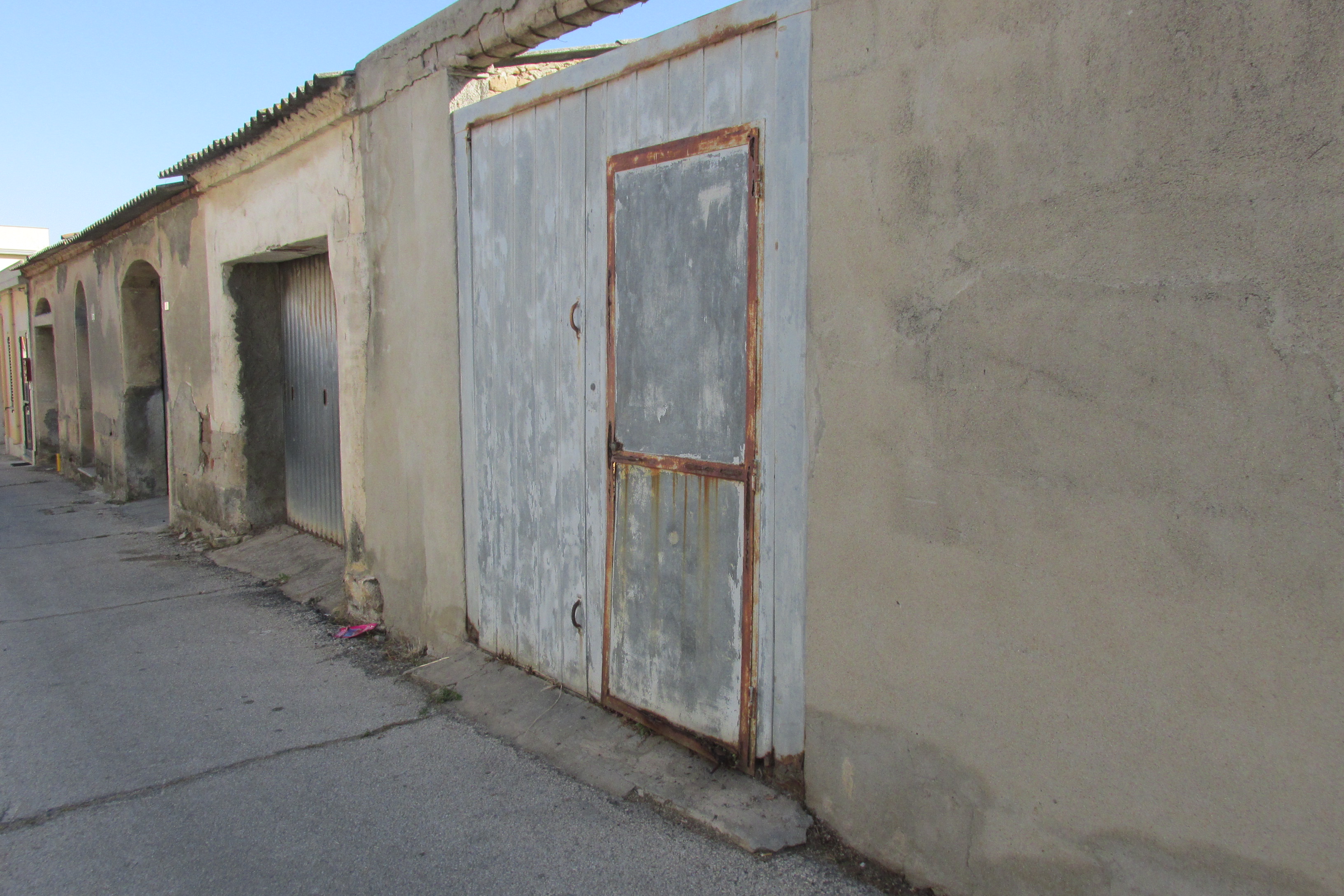
Several single story recently renovated homes maintained the style and character of old Cabras. An adobe wall, covered in a subtle play of colorful forms and texture, with the focus of attention–articulated shapes of missing plaster, and complemented by rectangular turquoise, wood strip doors–took me by surprise. An abstract painting done with tedious attention to detail, I was especially drawn to the door.

IMG_4527

As I reflected on what the front door in its size, structure, color, design revealed about the house and its inhabitants I took up my camera once again.

IMG_4428

IMG_4427

IMG_4430

IMG_4431

IMG_4509

IMG_4667

IMG_4528

IMG_4516

IMG_4518

IMG_4515

IMG_4511

IMG_4508

Not since the famous doors of San Miguel de Allende, Mexico observed over a decade ago had I seen doors with such appeal.

After visiting Cabras and the Leda D’Ittiri Wine Resort, we headed to Orosei where we found our hotel located in an ordinary neighborhood. A recently established new Italian hotel system, places the lobby and breakfast room together in one location, the sleeping rooms–two to six blocks away—generally, smack, dab in the middle of a neighborhood.

Seems that some Italians have a penchant for bringing tourists into the local life. Local life with all it sounds: ten year olds engaged in soccer, black garbed grandmothers holding court on the stoops, heated arguments over the latest victory at The World Cup, high flying delivery trucks among others. From the river of neighborhood sounds vibratory telegrams punched up the walls that lined the narrow slit of street beneath our room, made their way across our small terrace and rained  tingling vibrations throughout our second story room.  Connections to the neighbors is what I have at home, but on returning to a room following a full day of touring to confront a river of local sounds is not my idea of a good time. Next time precautions to avoid such will be taken ahead.

The front door to the building that housed the hotel rooms with our balcony just above.


IMG_4906


On a walk  to a restaurant for dinner we angled through another host of recently renovated homes. The facades as in Cabras retained the charm of old Orosei.  To my chagrin, I happened upon the following:


IMG_4898


IMG_4432

July 20, 2014 Fit for a Foodie

Once up and running, word got out, spread far and wide that the amrit was one of the best restaurants in the state of Maharastra. Tourists drove the forty five or so kilometres from what was then called Bombay, to the village of Ganespuri, knocked on the gate to the meditation ashram that housed the amrit, and asked for dining reservations. While the resident devotees found it rather humorous, tourists when told that the amrit not a public restaurant and served food for the residents of the ashram only, went away disappointed.

One of those fortunate individuals to eat the ambrosia served in the amrit three times a day for one solid year, why I get jealous when I remember my experience of living there some twenty-five years ago. The amrit’s five star reputation—well deserved!

This was not a restaurant in any ordinary sense, but it could have held its own against some of the starred Michelins. The philosophy behind it ran in deep streams of thought coming out of the Vedas and the Upanishads, some of the world’s most ancient scriptures. Food a necessity, not only nurtures the body, the divine can be known through the sense of taste.

One of my work assignments that year now seemingly so long ago, was prep work in the kitchen. As we washed, cut, and chopped vegetables, de-stemmed thyme, peeled mangos and papayas, kneaded dough for naan and chapatis we worked in silence and listened to recordings of ancient Sanskrit mantras and ragas. In a kitchen so contemplative and peaceful I could not help but fall into that same state. I could feel that peace slipping through my fingers into the food that would eventually nurture the souls of those ate it. This was in fact the intention behind the the silence and chanting. To this day I listen regularly to chants when preparing meals in my own kitchen.

An aside on a similar note: years later while visiting a large winery down in Chile I thought I was in a church when I entered the barrel room to the sound of Gregorian Chants. Piped in over a sound system because sound carries vibration, the winemaker convinced that the elevated vibrations of the chant would permeate the wine, played them continuously as the wine aged.

How many times have I heard the question, “do you like the food?” to be followed by the answer, “it’s divine”– music to the ears of the chef. According to the dictates in the ashram not only the method of preparation,  the intentions and state of the staff are important. I would add a very important third ingredient,  the essence and quality of the food.

What is it that makes me  feel that the food is divine.

First, it makes me feel good—it’s that simple.

Second, it takes me out of my ordinary experience into dimensions beyond the thing itself. Like the visuals of a gorgeous sunset, the taste of food can be overwhelming. It is one of life’s most pleasurable experiences. I am not talking about the self-gratification found in an eat, drink, and be merry hedonism in which food is solely an end in itself. That’s another topic.

How was the food in Sardegna? Divine! Simple, made with local ingredients, beautifully presented. People fuss over the preparation process like a hen taking care of her chicks.

As I toured the island some ingredients growing increasingly familiar drew my attention to the essence of  Sardinian food. I knew from conversations with chefs and locals there was a great deal of concern and pride in the way food was prepared–in short, with good energy.

Rather than my usual focus on the dishes or menus I began to focus on the menu of some of  the ingredients that turned up in one form or another across Sardegna.

Pecorino, like I had never tasted it, young and soft like mozzarella or aged from a few months up to a year. Casu marsu, a maggot riddled form was new to me. Pecorino and ricotta the other ubiquitous cheese are made from sheep’s milk until they are shorn in late spring. Cow milk replaces sheep’s milk for ricotta until late in the fall. With more sheep populating Sardegna than people it is understandable why lamb, pecorino and ricotta dominate the cuisine.


IMG_4852


Bread, made in the old, traditional way. I cannot imagine how a Sard could handle gluten intolerance, but surprisingly, there is a segment of the population with problems. One chef teacher told me that many feel that the gluten issue began when wheat production was “modernized.”


IMG_4245


Pasta. Culurgiones, ricotta filled pockets rather than ravioli, malloreddus, small dumplings in tomato sauce rather than gnocci, fregola, a nutty pasta frequently served with clams, varying slightly from north to south were common.


IMG_4285


IMG_4881


IMG_4774


IMG_4246


Veggies: tomatoes, zucchini and eggplant dominate.


IMG_4770


Seada: ravioli like pockets filled with pecorino, topped with honey is divine.


IMG_4417


IMG_4884


Wine: cannonau, vermintino, carignan always available, but rare varietals indigenous to the island may be had as well.


IMG_4243


IMG_4347


Nutshell: the divine food of Sardegna covers all three of the above criteria making it more than fit for a foodie, the kind of foodie as explained by Mark Bittman.

Rethinking the Word ‘Foodie’

By MARK BITTMAN

Pleasure is just one aspect. It’s even more important to reflect our values.

JUNE 24, 2014

July 11, 2014 Ethereal Roots near Alghero, Sardegna

IMG_2072


To the It who set my life in motion, to the That who continues to spur the dynamic behind it, I tell you, this nomadic journey around the planet is a great ride. I am grateful.

To sky-gaze from the top of Machu Picchu while a playful llama tries to take advantage of my cheek, to drum solo in the center of the King’s chamber of the great pyramid surrounded by the whispers of a thousand pharaohs singing incantations into a single sarcophagus, to sit under the Bodhi tree with a multitude of orange and maroon robed monks chanting the sacred mantra of the Mother of All Buddhas, “om tare tutare ture soha”, to chant in Sanskrit at an ashram in India with 10,000 devotees—such has been my karmic fate.

For a while I traveled mainly to what are known as “sacred sites.” Some were natural such as the Ganges in India, and the San Francisco Peaks in Arizona; others were man-made as the stone circles in Ireland, the temples of the Yucatan and the cathedrals of Europe built in honor of a spiritual tradition. I believed that like the vortexes in Sedona they held special energies capable of evoking playful, but serious flip-flops with one’s destiny. Not to deny this, but eventually I came to realize what I heard Atarangi, the Maori healer put so simply. “All sites are sacred.”

As a rule attachments to places far and wide do not get in my way, but on a rare occasion when I feel roots trying to germinate from the soles of my feet seeking to anchor my soul in a specific patch of land I know I have arrived at a spot where I could remain forever.

That is what happened two weeks back when we arrived at the wine resort on the Estate Leda d’Ittiri a few miles above the Catalonian city of Alghero near Fertilia. We left Cabras early in the day in order to get to the resort before dinner, taking the country road that led along the coast. Could not get enough of those turquoise waters!


IMG_4753


About half way along we stopped in the city of Bosa known for its colorful houses and canals and after a great veggie pannino continued on to the Wine Resort.


photo-28


photo-33


IMG_4685


IMG_4686


IMG_4687


IMG_4694


IMG_4693


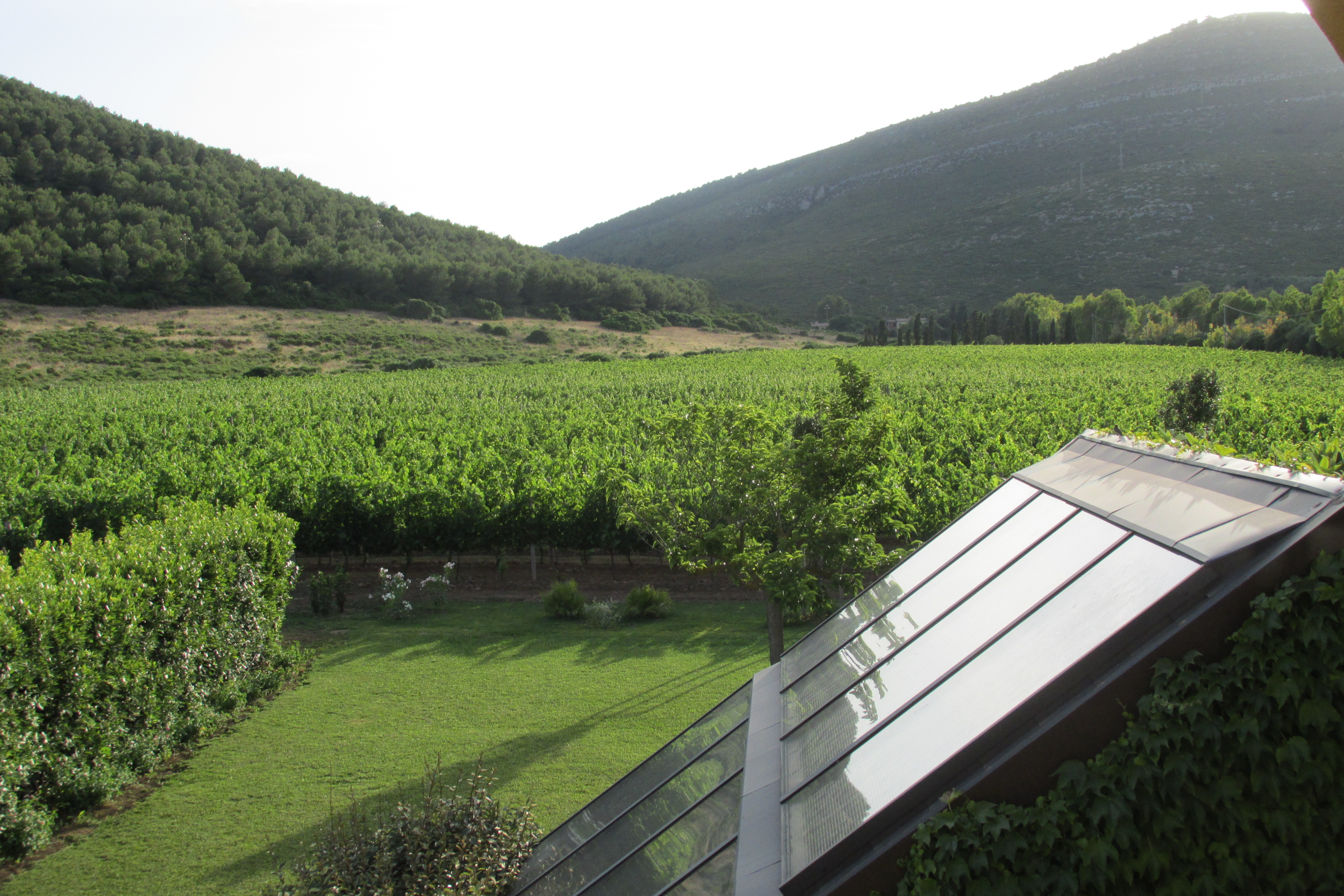
 Set in a green countryside the resort lies near a rugged part of the west coast bordering the Porto Conte National Park and not far from the Riviera del Corallo. After a three-hour drive from Cabras on two lane roads light with traffic we rolled into an estate of hilly vineyards and several hectares of olive orchards. Just beyond, I could see a wavy line of low-lying mountains shielding us from the sea.    


IMG_4712


Driving up the narrow gravelly road through the large iron-gate my soul soared. I felt the ethereal roots beginning to sprout. The grounds and the estate we were approaching all felt so familiar. Momentarily, I remembered a recent dream in which I had visited the estate of a nobleman.

As we got out of the car and walked toward the entrance to the main house a few people were happily lollygagging in the swimming pool to the far side of the front lawn. Near the front door I noticed a chalkboard inscribed with a dinner menu. As we entered the high ceilinged room furnished in Spanish antiques, a woman working at a dark wooden desk in the corner looked up. Smiling, she beckoned us over and warmly welcomed us as though we were family coming home to visit.

While Annamaria is the one who greets guests both she and her mother Antonella are the heart of the resort. When I found out that Antonella is the descendant of a Sardinian noble I understood my feelings as we drove up the driveway. Rather than a resort, I felt we had arrived at the private estate of some rather special people.

A picture of Annamaria and her mother found among the literature at the estate


IMG_4748


Once we settled into the haven of quiet I did not want to leave. Fortunately, as luck would have it, that would not be necessary. Annamaria informed us that the menu I had noted near the front door would be provided as a dinner for the guests that evening.   Those who chose to dine in joined together on the patio as we had been told, at 8:00 sharp. A couple from England and another from Bologna were to be our dining partners. Like an evening back home with close friends we were blessed with laughter and great conversation. As is the pattern on Sardegna, the dinner hour runs quite late, but by now I had adjusted. With only six guest rooms, dinners at the resort are rather intimate.


IMG_4713


A simple meal: the ubiquitous pecorino and salumni, aubergine and tomatoes, a local flan.


IMG_4715


IMG_4716


IMG_4717


Accompanied by Leda d’Ittiri wines


IMG_4714


photo-30


The following morning Annamarie gave us the full wine tasting of the Leda d’Ittiri wines produced by the estate. From grapes grown on the estate the wine production is done in the slow, traditional, by hand method. With such intensive work needed, the size of the production is limited. Wines are mainly served to guests and on occasion in the local vicinity. Sorry they are not available in the US.

On the 6.5 hectars, vermentino, cagnulari, locals varietals and some French merlot, cabernet franc and sangiovese are produced. We tasted all of them!


IMG_4722


IMG_4737


 In the four days that followed, roots holding steady we rarely left the resort. One evening when dinner was not offered we drove in to old town Alghero to sample the traditional local food of a renowned chef Benito Carbonella at Al Tuguri restaurant. More on that later.   On a second outing we drove along the edge of the nature reserve to Capo Caccia a cape that juts out into the Mediterranean. When we reached the end of the road we could see the dramatic cliffs that make sheer drop into the azure waters. At the foot of the cliffs a famous stalactite cave known as Neptune’s Grotto was waiting–at the end of 654 stairs. We were about to head down but with the sun setting we changed our minds.  


I wanted to stay on at the resort where I could walk through the vineyards and olive orchards in the morning, write on the terrace overlooking the vineyards during the day, swim in the pool with singing frogs at night, but there was a plan set in place and it called. On the fourth day I pulled up my ethereal roots and we drove out. If it is my fate to return to Sardegna, I will head straight for the Wine Resort.    


IMG_4711


IMG_4707


IMG_4719

July 6, 2014 Mamathones

While I was so touched by the Sedilesu family and their hospitality,  the “Mother” continuing to reveal her purpose had another intention for our visit to the village of Mamoiada that had nothing to do with wine tasting. Set in the heartland of Sardegna at 700 meters and surrounded by green unspoiled, but harsh mountainous land Mamoiada is a sleepy village inhabited by families whose historical lines make centuries. Apart from wine and history it has become famous for its renowned marathones.

When I told Maria the owner of the Wine Resort where we stayed in Alghero, that we were going to Mamaoida to tour Giuseppe Sedilesu’s cantina she insisted that we also visit the mask museum. I envisioned an exhibition space where the work of Sardegna’s contemporary mask-makers would be on exhibit. I should have known better.

When we finished lunch at the cantina, Salvatore Sedilesu led us down a quiet street and dropped us off at The Museo della Maschere Mediterranee. This was neither ordinary museum nor an exhibition space for contemporary art as I had anticipated. As I ambled through the small collection of masks and costumes I thought of what the Balinese have said forever, “art and life are not separate.” As a matter of fact there is no word for art in Balinese.  The masks and costumes in the museum an expressive art developing out of human need represent of one of the oldest continuing rituals in Europe, dating back some 2,000 years. The ritual, now mask festival continues to be celebrated annually and attended by up to 10,000 revelers.


IMG_4975


A woman met us at the door of the museum,  the only person we saw until we left. Beginning with a video of the festival as it is now celebrated she guided us through the small, but important exhibit. The guided tour enabled me to piece together a few facts.

I must say that today’s attendees witness a celebration, a long cry from the original. In an earlier time there were Christian attempts to offset and shut down that which was viewed as pagan. The tradition, rooted in pre-Christian practices and beliefs was baptized so to speak.

I have heard it said that the original marked the end of winter, sought to intervene with natural forces for a good climate for the harvest—that eternal issue: climate control. With ritual, incantations and objects empowered with signification the ancient ones hoped to accomplish their goal.

Today, in mid-January a celebration is held in honor of St. Anthony who is said, to have stolen fire from hell to give it to mankind. Bonfires are lit across the village in commemoration of his gift (I was quite surprised to hear of Anthony acting in the role of a Prometheus). At this time the mamuthones, ominous and rather creepy looking characters wearing traditional carved black masks, shaggy dark sheepskins and sets of bronze bells that can weigh up to sixty pounds make an appearance. Not a role for the timid!

They appear again on Shrove Tuesday the day of Carnival. Led on a leash by the issokadores twelve mamuthones representing the twelve months, process through the streets. The issokadores dressed in antique gendarmes uniforms are perhaps a leftover from the Spanish control of Sardegna. Like All Hallows Eve this is a night when work is done to ward off the demons.


IMG_4994


IMG_4979


IMG_4980


A local crafstman preparing sheep clothing for the ritual.

IMG_5048


I was told that up to another two hundred mamuthones could parade. I am reminded me of some of the shamanic traditions of the Tibetans and Native Americans.

The museum exhibit included masks and ritual clothing from other ancient cultures around Europe including Greece and Scandanavia. I found none of them intimidating, nor did I feel the kind of energy that such works can evoke. Some were merely spooky objects of curiosity. To get the full point of the masks and sheep’s clothing I believe it is necessary to participate in the experience.


IMG_4982


I do not think I will be returning to Mamoida, but I am grateful to have been guided to the mamuthones. I touched into a primal line of human action that connects with much of what I have experienced in contemporary drumming and shamanic circles, and if for nothing else it served as a reminder of a world beyond cell phones and I-pads.


IMG_4977

July 4, 2014 Fireworks from Matera

Happy Fourth of July

On July 2, the people of Matera, Italy concluded a three day celebration of their patron saint, the Madonna of Bruna. We celebrated with them and at the end of the day we retired at midnight. A half hour later we were roused from sleep by the sound of what we initially thought was a cannon. As the sound continued recognizing the sound of fireworks, we jumped from our bed and ran to the window. The show concluded at 1:15 AM!!!!!


IMG_5568


IMG_5567


IMG_5563


IMG_5558


IMG_5593


IMG_5595


IMG_5600


IMG_5601


IMG_5606


IMG_5615


IMG_5616


July 1, 2014 Remarkable Meetings

From my table at a café in Matera I look out at the following.

photo-28

  A consistent round of church bells mark the hours. Sweet tweets and willowy songs of birds recently flown in from Africa fill spaces between bell rounds. An occasional map poring tourist seeking transport passes by. Sitting here in Matera I am reflecting on Sardegna,  somewhat torn between whether I should record facts or simply communicate experiences. Perhaps a bit of both.


Going to Sardegna as I alluded earlier is like dropping off the planet and falling into a quiet place where the living is slow, the quality of food impeccable and life is about connection with family and friends, all marked by the rhythmic kneeling to the gods of the seasons and the Deity. Sardegna, when I think of you it is not your turquoise beaches that come to mind although I have rarely seen more beautiful. Nor the nuraghis whose presence is a reminder of time before recorded time.  I think of the people we met as we made our way along the wine route that our friend Tim Robertson of Robertson’s Wine Tours set up. Our meetings with winemakers were remarkable.


We began in the southwest where we stayed on Sant’Antioco, then up the central west coast to Cabras on the Gulf of Oristano. From Cabras we had a stay in the Catalan area of Alghero, then a trip to the east coast city of Orosei.  Finally, we returned south to Calgliari, the capital of Sardegna. Along the way I learned more about the grapes of Sardegna, the winemaking process and of course the end result.


Guiseppe’s Sedilesu’s story from orphan at nine to overseer of one of Sardegna’s most prestigious cantinas is a case in point. Guiseppe went to work in a sawmill. As he grew up he recognized that having wine at the table for dinner carried a certain dignity. By the time he had his own family he decided to provide wine for his family meals. Taking some of his hard earned money he began to rent vines. We would call this sharecropping. Eventually, Guiseppe was able to purchase a hectar and grow his own vines. As they grew up his children helped him with the small vineyard. Along the way he acquired more hectars and honed his winemaking skills all the while focusing on cannonau for which Sardegna is famous. The children acquired the same skills.


IMG_4937


Guiseppi, his wife, children and their families


In Sardegna family is the base and core of everyday life. Along with cannonau, family connection is given as the reason for the longevity, centenarians are quite common, of so many of Sardegna’s citizens. When Guiseppe reached an age where he knew it was time to consider retirement he gathered his children and offered them a proposition. He could divide up the vineyard into parcels for each and himself, or the siblings could band together to develop their cantina and the quality of the wine. They chose the latter.


Mamoiada is famous for its mask festival, but as one writer said, “there is nothing strange about the wines of the Sedilesu family, a new star of Sardinia’s wine scene. This clan, under Giuseppe, the elderly patriarch, has moved with the times, to produce organic and biodynamic wines. The result is intense, complex vintages…”


IMG_4974   Salvatore and Emilio handle public relations and hospitality. Francesco not available  for the photo is the oenologist.


IMG_4910   Mario of Travel Motus accompanied our tour of the cantina.


IMG_4942   Cement tanks


IMG_4936


IMG_4915


IMG_4948   Row upon row of tightly stacked bottles of aging wine extends back for several meters.


The Sedilesus set up impromptu tables in the storage room and surprised us with a feast of the typical foods of the region.


IMG_4972


IMG_4969


IMG_4967   The dish on the far left is brain. I thought I was eating fried zucchini!


IMG_4955  Nine bottles–all cannonau representing different vineyards and qualities. One white called granazza is a mystery grape as of yet unidentified.


Gabbas from Nuoro who focuses on canonnau is attorney turned winemaker. He, too, purchased a vineyard, worked it on days off until he decided to devote himself full-time to working with the grape. His wine has received three glasses six years in a row from Gambero Rosso, (means red prawn and comes from a tavern in Pinocchio where the cat and the fox dined) a guide started in 1987 and comparable to an Italian Michelin Guide for wine. Francesco, Guiseppe’s nephew gave up architecture to join full-time in the family business. Today they produce some of the finest on Sardegna   We  piled us into Guiseppe’s Range Rover  to be taken on a hair-raising ride up and down the slopes of the vineyard.


IMG_4830    Guiseppe at the wheel


IMG_4829     Far above the cantina.


IMG_4833


IMG_4835


IMG_4828


IMG_4836    Queens Lace borders the vineyard.


IMG_4839   Gabbas wines enroute to the US.


IMG_4848    From the tasting room.


IMG_4864


IMG_4868

June 28, 2014 The Power of Sardegna

Map_Sardinia

I have missed you my dear friend. Yes, I am referring to you dearest writing. I felt you pulling on my mind and heart, but it was just impossible to be with you. The last several days have been so long and full. The mid-morning breakfast followed by the day’s activities, not to mention the late night feasts that often went on to midnight. By then, no energy left, let alone time for you. Most days I have been caught up in establishing deeper relationships with cannonau, vermintino, carignano, turriga, monica, nauraghi some of the well-known nectars with which the goddess has endowed the beautiful island of Sardegna.

And Sardegna. How was I to know? Her energy so deep and intense. Twirling from her center like a dancing Sufi rotating in slow motion she embraces her children as she spins. Sedona has nothing over Sardegna.  Drums beat from the vortexes, the ancient ones call from the base of the nuraghi, Neptune pleads from his Grotto, the hyla sarda resound with the song of the night and the sacrificial lamb gives its bleat by day.  Century after century the rituals repeat themselves.
I had no idea why Gaia was calling me to Sardegna, but with all good intentions I planned the trip knowing that purpose would eventually reveal itself.  It would be similar so I thought to following the grape in Napa Valley, Walla Walla, or Willamette. After all, wine regions here or there have so much in common.

 I concur with DH Lawrence, “Sardegna is different.” I have already noted how quiet and tranquil she is; add to that simplicity and complexity. Layered in the history of so many civilizations stretching back thousands of years to the Ozieri culture whose rock tombs stand yet today followed by the nuraghi, who left seven thousand nuraghe in their trail. So mysterious these Bronze Age towers and settlements that came before the dawn of history, what was their purpose? I like to think for ritual and community gathering, but then how would I know this unless I had been there? Later the Phoenicians arrived followed by the Carthaginians, the Romans who were responsible for roads and cities. After the fall, the Vandals, the Genoese, and the Catalans left their imprint. Remains of the old reverberate today in the parades and festivals especially of the interior villages with each revealing its own unique culture and tradition. With so many layers I am unable to get to the bottom of it all. She is unfathomable.

nuraghe

A nuraghe overlooks one of her many stunning beaches

Sardo is the language here. I have heard that it is the closest spoken language to Latin. Many villages, even side by sides have their own dialect. The Sardinians make it clear that they are not Italian. They are Sardo! I made the mistake of calling one an Italian only once. Some Sardo’s feel this with such intensity that they have started a separatist movement known as the Swiss movement. They want to leave Italy and unite with Switzerland. I’ve heard some of the Swiss seem to be happy with this; they would have access to the beaches and lagoons, the Sardos with an enlarged bank account.

The wine culture is very different from the rest of Italy. It goes back thousands of years beginning with the Nuraghi. It developed separately from the rest of Europe including Italy. Even though the Catalans occupied Sardinia until the eighteenth century even that did not impact winemaking so much especially in the south.

Tim, Trevor, Jeremiah, Eduardo, Ceri, Clare, Jeanne, Sandra, Shachi, Maneesh, Adam and any I have missed that have helped to steward the industry, I have so much to share with you about Sardegna’s new developments in winemaking.

This afternoon we lifted off the island from Caglieri on Ryan Air and flew to Bari the capitol of Puglia near the heel of the boot. Tim had Luigi pick us up at the airport. He drove us to Matera where Tim and Chris were waiting. With a few days of lollygagging in the stone village at our disposal, hopefully there will be time you my dear friend. Together we will share the experiences on Sardegna.

P_writing


June 24, 2014 Getting Acquainted

It is said that the Renaissance bypassed Sardenia, but surely not the twenty first century. I expected dirt roads, villages of battered huts and people in tattered clothing. To my chagrin, I had taken on a view leftover from the days following World War II. Homes and buildings look spanking new, just painted. So far the roads are very good, the driving easy. So far the food as I expected is simple with depth to the flavors. The people could not be more gracious and hospitable.


After flying into Caglieri, the capitol we drove toward Sant Antioco. An island on the south western corner of Sardenia, it is connected to the mainland by a bridge. I’ve heard it said that Sant Antioco is the least developed part of Sardenia. The only indication I have seen so far are some gravel roads off the main. Friendly people.


We arrived at Luci Faro our hotel about 5 pm. Named after an old lighthouse we could see it from our balcony.


IMG_4236


IMG_4240


After a dinner not worthy of mention and our first overnight,  we were scheduled to tour 6 Mura a cantina in the small town of Giba. It would take less than an hour to get to Giba from hotel to cantina according to Google Girl, but we headed out an hour and a half early in case we got lost. Driving in we rarely saw any signage. We were driving south on the eastern tip of the island.


An hour later Google Girl told us we had arrived. Huh? We had to be in view of 6 Mura, but no Mura to be seen. We called Andres the winemaker and he gave us specific directions. He instructed us to move down the road and turn right at the red house. With noo red house in sight we called him again. This time he sent Giancarlo to rescue us at a nearby gas station. It turned that the red house out was a small red brick attachment to an industrial business next door winery and both within thirty seconds of our viewing point.


Andres was supposed to meet us at the cantina, but when we arrived he called us on his cell and said he had to be in the field. As we had come from California, he apologized, but had to be in the field. He told us that he had asked his assistant to call us the day before and ask us to come then when he was free–we were on the plane from Rome to Sardinia, and apologized that we had not gotten the message. In any case he instructed Giancarlo to give us a tasting. Between my Spanish similar to Italian, my partner’s growing skill with Italian and our Google language app we managed to have a great time with Giancarlo. No tour guides, no winemaker, just Giancarlo and the two of us enjoying simple, limited bantering and good wine. I questioned Giancarlo about his responsibility at the cantina. He simply answered, “it’s drinking wine.”


IMG_4257


Hand labeling at 6 Mura.


IMG_4254


Tasting from the barrel.


IMG_4258


Giancarlo and….


IMG_4266


6 Mura is available for purchase in the US. More about the varietals and tasting in a later blog. Carignano got three glasses from Gambero Rosso for 2013 – carignano del sulcis (the specific source of the carignano).


Giancarlo told us that Rosella’s in the Locanda Hotel had the best restaurant in town. An hour and amazing lunch of traditional ricotta ravioli in brodo later, we agreed.


Rosella’s

IMG_4283


IMG_4285


On the way back to Luci Faro we stopped to take a look at a local cemetery.


IMG_4270


IMG_4272


IMG_4274


IMG_4273


The weather had cooled a bit by the time we got back to the hotel, but still nice enough for a walk along the rocky coast line. We hustled down a gravel road through the fields beyond the hotel.  Rows of crab-apple topped nopales lined up and stretched across the fields like soldiers. Old and gnarled cactus plants surely they serve as representatives of the ancient ones of Sant Antioco.


IMG_4300


We continued over on to the cliffs along the coastline.


IMG_4291


IMG_4306


On our return to the hotel we noticed a newly planted pine forest.


IMG_4314


Dinner on the second night much better than the tough faro on the first. The large bicycle touring that was here on the first night has left and there is far less noise.

Ending the day, not so much eventful but still interesting, I cannot help but reflect that Sardenia has such a tranquil energy. A soft quiet underlies the call of birds in the morning, the singing of frogs at night and church bells at the top of the hour. Silent mountains rise to meet luminous skies. Turquoise waters lap the shores. Space and silence everywhere much like the California I knew as a child when unbounded space flowed freely. Freeways, the one or two that existed were not crowded; roads were open and easy. Likewise, in Sardinia driving is not rushed or hectic. Pedestrians cross the streets any and everywhere, bicycling is ubiquitous.

Life is casual. I am getting oriented.

June 21, 2014 Roma

We arrived to a hot, muggy Rome with ninety five percent humidity. Hardly off the train, a woman approached us with an offer of a room for the night. Rather than pursuing the recommendations in Europe on Five Dollars a Day and hoping to save some time, we followed her. The second floor room would have been ok for a night or two, but I found the woman’s energy intimidating, something about it not ok. We politely rejected her offer, made our way back to the hectic area around the train station, stored our backpacks in a locker and caught a bus to the Vatican. When I felt satisfied we returned to the station grabbed the backpacks and hopped on an overnight to Barcelona.

Forty years ago turned off by noise, pollution, the strange woman, I left and did not return to Rome until 2010. That’s when I fell in love.

On the current trip we ubered in from the airport with a polished limo driver, Emilio. He spoke to us in the fluent English he learned as a child when he lived in Montreal. Later his father brought the family back to Rome. He explained that Uber differs in Italy from other countries in that only black limos are available, driven by professional drivers. Emilio gave us a smooth as silk ride to our hotel in Trastevere.

Arriving at 9:30 AM with one day in Rome and, in order to recuperate from a twenty four hour trip on which I had no sleep, we limited our schedule to a few short walks, two sites, and a Michelin *ed dinner.

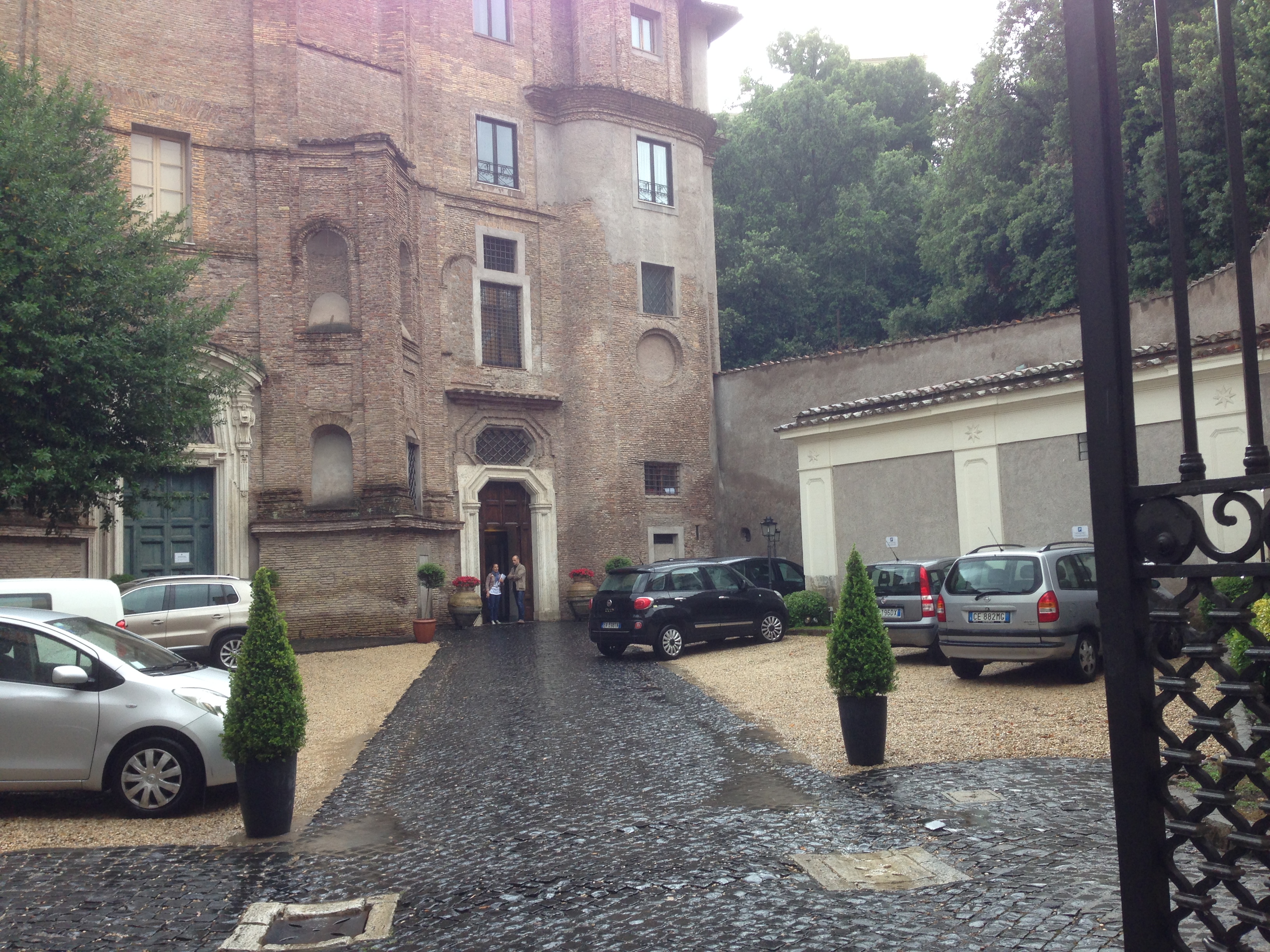
The first, our hotel the Donna Camilla Savelli, is a convent built in the seventeenth century. I use is because it is still part convent.


IMG_4184


Raining when we arrived.


IMG_3998


IMG_3994


Former convents turned into hotels are warm, and resonant with the energy of the sacred rituals that were performed daily  for centuries. Spacious, originally built with a spiritual purpose in mind they are a far cry from the chains that river across America. From Spain, Puerto Rico, Oxaca and now to Rome, I cannot imagine why my karma continues to take me for sleep-overs in these hallowed sites.


photo-36


The Camilla, designed by Francesco Borromini the famous seventeenth century architect is currently considered one of the art sites of Trastevere, the old part of Rome that lies at the foot of Gianicolo Hill. Camilla Savelli a noblewoman commissioned Borromini in 1642 to build the convent of “Santa Maria dei Sette Dolori” as well as an adjoining church. Today the hotel carries her name.

Those who renovated the convent adhered to the laws of the Baroque style as well as Borromini’s intentions. It is a hotel, but retains the original style and space of the former and present convent. The nuns who turned the convent over to the architects retained part of the original place for their current living quarters. Just off the lobby is the old chapel where mass is celebrated daily.


photo-33


photo-31


IMG_4048


We stayed at the hotel the last night of a two-week visit to Rome in 2010. The quiet by day, the bustling café scene by night of the area appealed to us; we knew it would be a great place to recover from jet lag.

While there we ventured out for a short walk about mid-day, but when the monsoon came in a few hours later we headed back to the hotel and rested up until dinner.

In May we made a reservation at All’Oro a one star Michelin housed in the The First Luxury Art Hotel our second planned site. The first? Sounds a bit dubious. But, it is true. When I think of the art hotels I have visited over the years, this one takes the cake. No hippie-doo, no cheesy rooms in a vagrant run-down area, just pure luxury and high, fine art- literally a visual feast for the eyes. At a standard 500 euros a night, could it be less?

Like the Camilla the Art Hotel is also in a historic area. Near the Piazza del Popolo, the Spanish Steps, Via del Courso, Via del Babuino, and inside a historic building but totally renovated with natural materials and with the original façade was left intact.

We arrived early enough to give ourselves time to view the more than 200 pieces of contemporary art, much of it on the ground floor lobby, bar and restaurant.


IMG_4205


IMG_4206


Bob Arneson’s influence!

IMG_4208


IMG_4015


IMG_4012


IMG_4217


The food.

We lamented that our great lunch at a tratoria near the hotel including melt-in-your-mouth squid, tomatoes. and onions highlighted with green peas and my partner’s rabbit in rosemary brushed with a light olive oil, and a fresh chicory, did not allow much internal space for dinner. With our planned, brisk walk interrupted by intense rain-pour, we debated about canceling, but oh my goodness, thank the Lord we did not.


After intense research I had chosen All’Oro not because of its good reviews, but rather so we could sample the innovative work of the chef. From the readings I gathered that Riccardo di Giacinto is a bit like some of my favorites chefs in California: Carlos Salgado-Taco Maria in the OC, Joseph Centano-Bar Ama and Orsa and Winston in LA, Matthew Accerollo-SPQR in SF among them. These young, humble chefs are cooking in the style often learned from the mothers and grandmothers, doing a fusion of traditional flavors with new. At the heart of their work is heart and their own creative inspiration.


As it is written, di Giacinto is “known for his unique talent to revive the authentic flavor and reintroducing it with dazzling master into the modern plate.”


I ordered two dishes. The first, Reduction of carbonara. The photo says it all. An eggshell filled (approx.. 2T) with a combination of the flavors of pasta carbonara: pecorina, parmesana, egg yolk and surely somewhere in there a dollop of bacon fat? This almost vegan could not resist! It was all I needed to make my dinner complete.


IMG_4222


Followed up with cod tempura shaped like three pears in a tub. We rejected a final plate of delicate sweets but delivered to our table none-the-less, perhaps by mistake.


IMG_4225


Tired and happy we ubered back to Camilla with Pietro.


Ciao for niao.


Older posts Newer posts